
The pitch went well. It always does. There's a particular kind of founder who can make almost any idea sound inevitable — TAM, ICP, PMF, the right pauses in the right places. The deck is beautiful. The waitlist has 400 names. The problem, if you ask hard questions, is that 380 of those names are people who were too kind to say no.
This is the texture of idea failure in 2026: it doesn't look like failure. It looks like early traction.
The failure rate for new ventures has always been high. That's not the signal. The signal is this: the type of failure has changed. A decade ago, most ideas failed because the market wasn't there. Today, they fail because the architecture was wrong from day one — the operating model was designed around a fundraising cycle instead of a customer one, the governance was improvised and never formalized, the community was assembled instead of found. The market was there. The structure wasn't built to reach it.
This is a structural problem wearing a market problem's clothes.
What separates an idea that deserves to exist from one that merely sounds like it should:
Not the concept. Not even the founding team. It's the architecture underneath — the operating logic that remains when the founding energy runs out, when two team members leave in the same month, when the grant application is rejected, when the algorithm stops rewarding what you built.
An idea that deserves to exist has a structure that can survive its own success and its founders' absence. That's a higher bar than most validation frameworks ask for. It's also the only bar that matters.
This edition is built around that gap — and what it looks like when you close it deliberately.
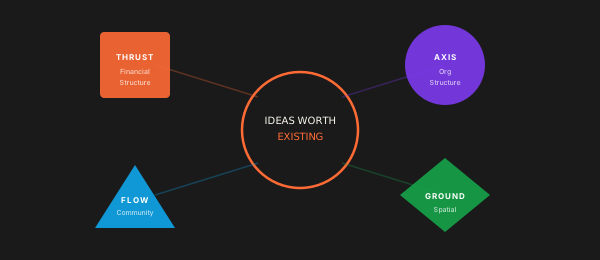
The four structural questions this issue answers:
→ Can your model sustain itself without a third party deciding it should exist? (THRUST)
→ Can your project outlast the specific people who started it? (AXIS)
→ Can you find your audience without gaming a platform that will change its rules anyway? (FLOW)
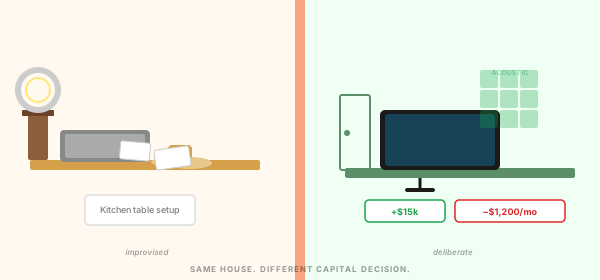
→ Are you treating physical space as a capital decision or a comfort decision? (GROUND)
These are not philosophical questions. They're diagnostic ones. The answers tell you whether you have an idea or a model — and whether you're building something or performing the appearance of building.
The question was never whether the idea was interesting. Interesting is easy. The question is whether it's real — and whether you're willing to find out before you ask anyone else to believe in it.